

He Sabadell Business Hub of Valencia has hosted the III Annual Meeting of Socially Responsible Valencian Entities (SIR Registry), an event organized by the Sustainability Office of Valencia Chamber and the Diputació de València, in collaboration with the General Directorate of Economy of the Generalitat Valenciana.
The Cátedra de Empresa y Humanismo (CEiH) The University of Valencia has played a prominent role in the technical program of the day through the intervention of its director, Dr. Thomas Gonzalez-Cruz, who has addressed the main regulatory and methodological developments in the process of joining this public rating system.
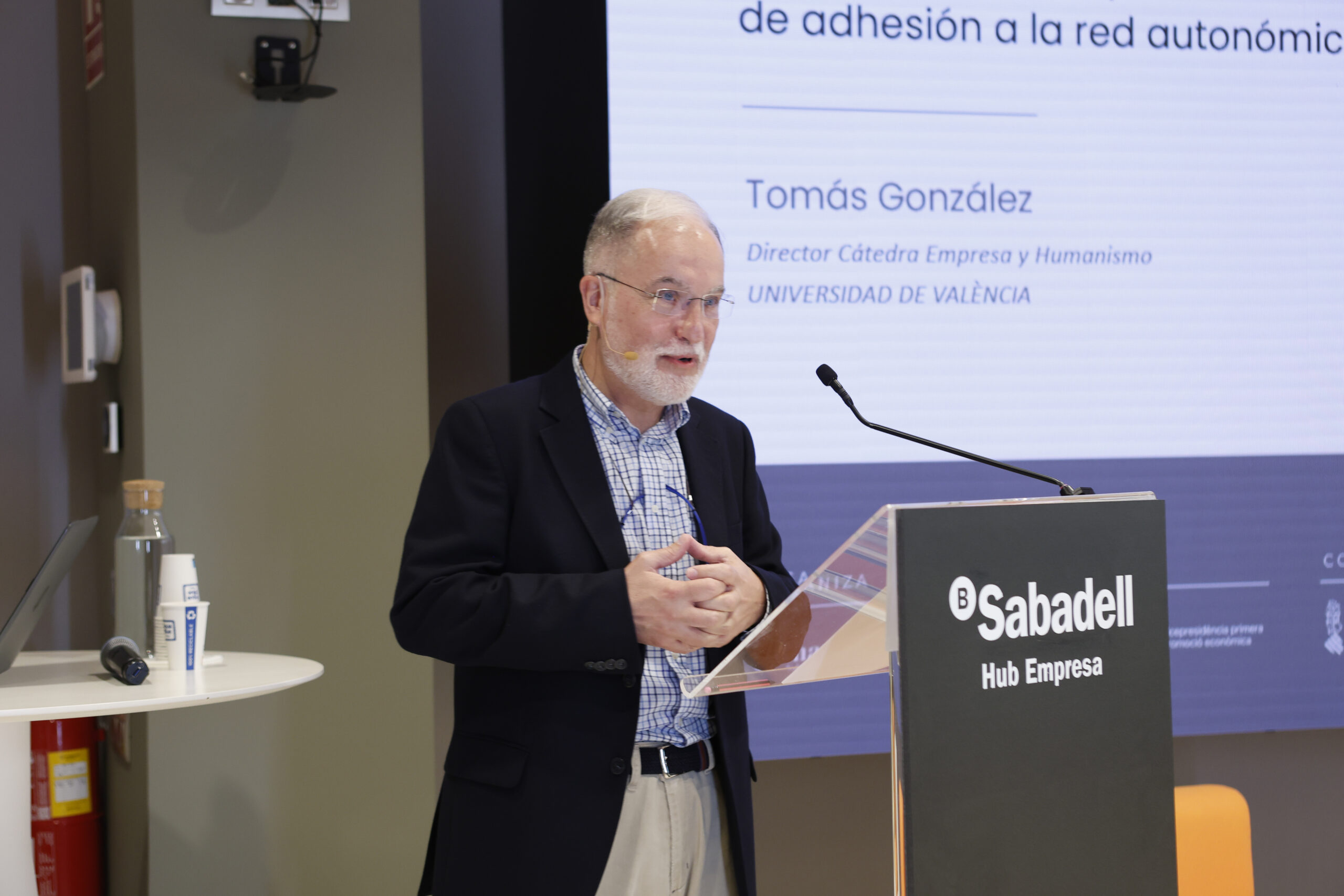
The SIR Registry as a tool for learning and continuous improvement
During her presentation, titled "Main new features in the process of joining the SIR Register"González-Cruz has emphasized that the incorporation of environmental, social and governance (ESG) criteria in organizations should not respond to a merely bureaucratic logic or the desire to obtain a static distinction:
"The SIR Registry should never be, nor can it ever be, an end in itself, but rather it should be the tool, the starting engine that allows us to know where we are, where we want to go and to articulate a clear process of management and continuous improvement."
Likewise, the Chair's director has highlighted the work of the technical and institutional team that has made the evolution of the registry possible, progressively adapting it to the real productive fabric of the Valencian Community, composed mainly of SMEs, cooperatives and third sector entities.
European regulatory simplification and protection of the value chain
Within the framework of the regulatory analysis, European trends toward simplification and proportionality in accountability (CSRD and ESRS frameworks) have been presented. González-Cruz explained how the standardization of indicators facilitates a common and understandable language for all stakeholders and acts as a protection mechanism for SMEs in the value chain (Value Chain) in response to the information demands of large clients and corporations.
From the perspective of business humanism, the Chair has argued that the rigorous collection of non-financial data allows management committees to make more informed decisions, reduce risks, optimize resources, and focus on the real impact on people, the territory, and future generations.
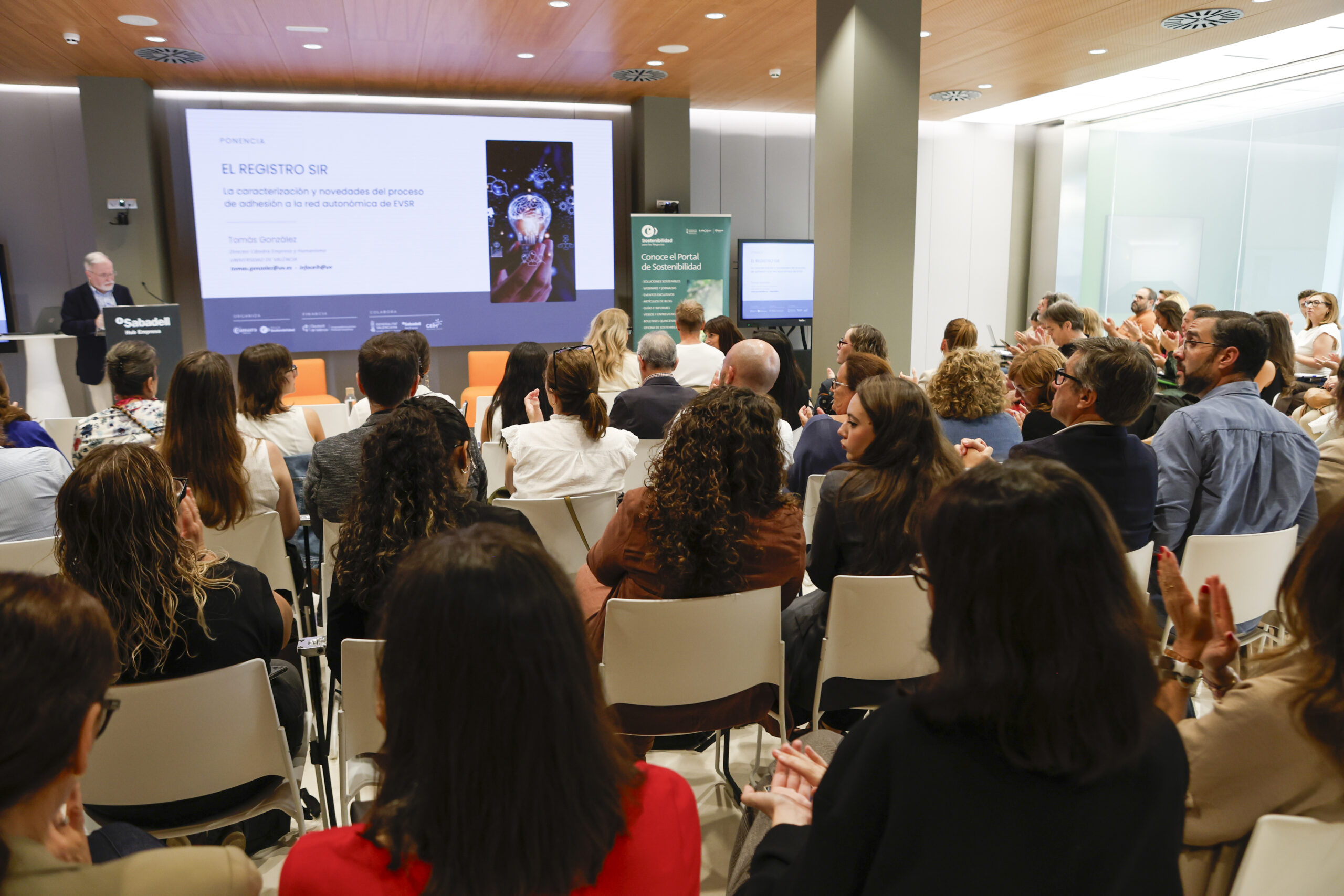
Knowledge transfer and dialogue with the social fabric
The meeting was also attended by institutional representatives such as Vicente M. Monfort Mir (Deputy Director of Economic Analysis and Planning of the GVA) and Francisco José Soria Calatayud (Director General of Economy), as well as with sectoral debate tables where companies from the industrial sector, services and social entities have presented their practical cases.
With their participation in this event, the Chair of Business and Humanism It reaffirms its commitment to the transfer of knowledge to society, providing conceptual and methodological rigor to public policies and supporting the Valencian business network in its transition towards ethical, sustainable and competitive management models.


